Blog
Spanish for German Speakers: A Clear Path (With Explanations in German When You Need Them)
German speakers often learn Spanish fast — then hit a wall on gender, ser/estar, or the subjunctive. The wall is smaller when someone can explain the rule in German, then put you back into Spanish practice.
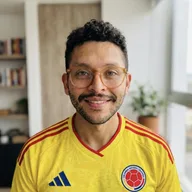
That is the niche Spanish Tinto is built for: Colombian Spanish, taught with English (C1) or German (B2) as a bridge when you need it. I am Santiago Garnica, a Colombian lawyer and Spanish tutor. Lessons are structured 1:1 — not endless free chat, not a marketplace card as the main door.
Book a free 20-minute call on spanishtinto.com if ser/estar, gender, or the subjunctive already slows your speaking. We check level in EN or DE and leave with one weekly focus.
Why German speakers need a different bridge
German and Spanish share more structure than English and Spanish in some places (endings, compound thinking, a comfort with “rules”). In others, they clash hard: articles and gender, verb aspects, and how politeness works in speech.
A tutor who only stays in Spanish can work for solid intermediates. Beginners and careful learners often waste energy decoding the meta-explanation. A short German (or English) bridge saves that energy for speaking — which is what you came for.
CEFR framing helps here: at A1–A2 you need clarity more than immersion theatre. At B1 you still benefit from a DE gloss when a rule is new. The goal is not to teach Spanish in German. The goal is to unblock Spanish with German when the rule is opaque.
Typical DE→ES interference (and how we fix it)
Articles and gender
German has three genders; Spanish has two. Transfer errors are normal: el/la swaps, or defaulting to one article under stress. We fix this with short noun–article drills tied to your vocabulary (work, travel, hobbies) — not random word lists.
Ser vs estar
German often collapses both into sein. Spanish splits identity/essence (ser) from state/location (estar). One lesson is not enough. We reuse the contrast every week in sentences you actually say: how you feel, where you are, what your job is.
For the full cheat sheet, adjective traps, and a 30-second decision test, see the dedicated guide: Ser vs Estar for German Speakers — when sein splits into two verbs.
Past storytelling
German past habits and Spanish pretérito / imperfecto do not map 1:1. German speakers often overuse one Spanish past or avoid storytelling. Week focus: one personal story (weekend, trip, work week) with targeted correction.
Rules, signal words and the Spain vs Latin America difference are explained in Preterite vs Imperfect for German Speakers.
Subjunctive — light, not scary
You do not need a full university chapter on day one. You need the high-frequency patterns: wishes, polite requests, “I hope that…”. We introduce them when your goals need them (travel, email, meetings) — with a German bridge sentence, then Spanish production.
Politeness and tú / usted
Colombian Spanish often sounds warm and careful. For DACH professionals used to clear Sie/du lines, we map situations: shop, taxi, client call, friend. You leave with phrases, not a lecture on culture alone.
Falsche Freunde (quick glossary)
False friends slow German speakers more than they expect. A short list we revisit in class:
- actual = aktuell (current), not English “actual/actually” → that is en realidad / realmente: el presidente actual.
- bekommen ≠ bekommen-looking traps: Spanish obtener / recibir, not a lookalike.
- Eventuell ≠ eventualmente (often “eventually” in learner English interference). In Spanish prefer posiblemente / quizá.
- Quote / numbers: say prices and times out loud in Spanish early — German digit grouping habits carry into speech.
- Chef (DE “boss”) ≠ chef (cook). Use jefe / jefa.
We do not memorize 200 false friends. We catch the ones that appear in your speaking and nail them.
The full list of common mistakes and false friends is in Common Spanish Mistakes German Speakers Make.
A clear 4-week path (not another random chat hour)
- Week 1 — Orient. Free 20-min call on spanishtinto.com: level check in EN or DE, one goal (travel, work, or everyday), a tiny speaking target for the week.
- Week 2 — Unblock one clash. Usually articles + present survival phrases or ser/estar in real sentences. Homework: five reusable lines.
- Week 3 — Tell one story. Past forms for your life (weekend, trip, project). Corrections on the errors that block understanding.
- Week 4 — Review and stretch. Same topics faster; optional light subjunctive or a work email stub. Decide on a prepaid pack if you continue.
List price: $17 / 50 min. After the free 20-min call, the recommended pack is 10 lessons ($149). Current prices (USD, one-time payment, no subscription): single class USD 17 · Tinto 10, 10 classes, USD 149 (book within 30 days) · Tinto 20, 20 classes, USD 280 (valid 60 days). Reschedule at least 24 hours ahead. A no-show uses 1 credit.
What “structured” means in a German-friendly lesson
- Speaking first, with targeted correction
- One weekly focus you can name in one sentence
- Short DE/EN bridge when the rule needs it — then back to Spanish
- Homework that fits a full calendar in Berlin, Zurich, or Vienna
You are not buying a podcast with a human attached. You are buying clarity.
What we do not do
- A marketplace profile as the main way to book
- Invented ratings or fake “students taught” counts
We do direct booking, real reviews from students like Stefan (who noted structure and strong German/English while aiming for B2), and a method you can follow.
Who this fits
- German speakers at A1–B1 who want calm structure
- Professionals in DACH who need Spanish for travel or work
- Anyone searching for “Spanish tutor who speaks German” and wants a real site, not only a marketplace card
- Learners who prefer Colombian / Latin American Spanish over Spain-only textbook defaults
About the author
Santiago Garnica — Colombian lawyer and Spanish tutor. I teach structured 1:1 Colombian / Latin American Spanish with explanations in English (C1) or German (B2) when you need a bridge. Book directly at spanishtinto.com.
FAQ
Do you explain grammar in German?
Yes, when it helps. I teach in Spanish with bridges in German (B2) or English (C1). The bridge is short; the practice returns to Spanish so you build speaking, not translation habits.
Is this only for beginners?
No. The DE bridge helps most at A1–B1, but B1–B2 learners use it for stubborn points (past contrast, subjunctive, formal email). The free 20-min call checks fit and level.
Colombian Spanish or European Spanish?
Colombian / Latin American Spanish on purpose — clear vowels, ustedes for plural “you,” everyday vocabulary from Bogotá and the region. Textbook Spain forms (vosotros, some vocab) are explained if you need them for exams, but the default is LatAm.
Book the free 20-min call
Book your free 20-minute call on spanishtinto.com. Bring one goal (travel, work, or everyday). Leave with a simple plan.
Related: Ser vs Estar for German Speakers · Por vs Para for German Speakers · Colombian vs textbook Spanish · Beginners: first month · About
Book a free 20-min call
Directly on spanishtinto.com — not a marketplace as the main path.